Your guide to bakhoor and home fragrance
Learn about bakhoor, its ingredients, traditions and the art of scenting your home.
Featured guides
For anyone new to the world of bakhoor
A handpicked collection of essential guides to help you understand, choose and use bakhoor with confidence.
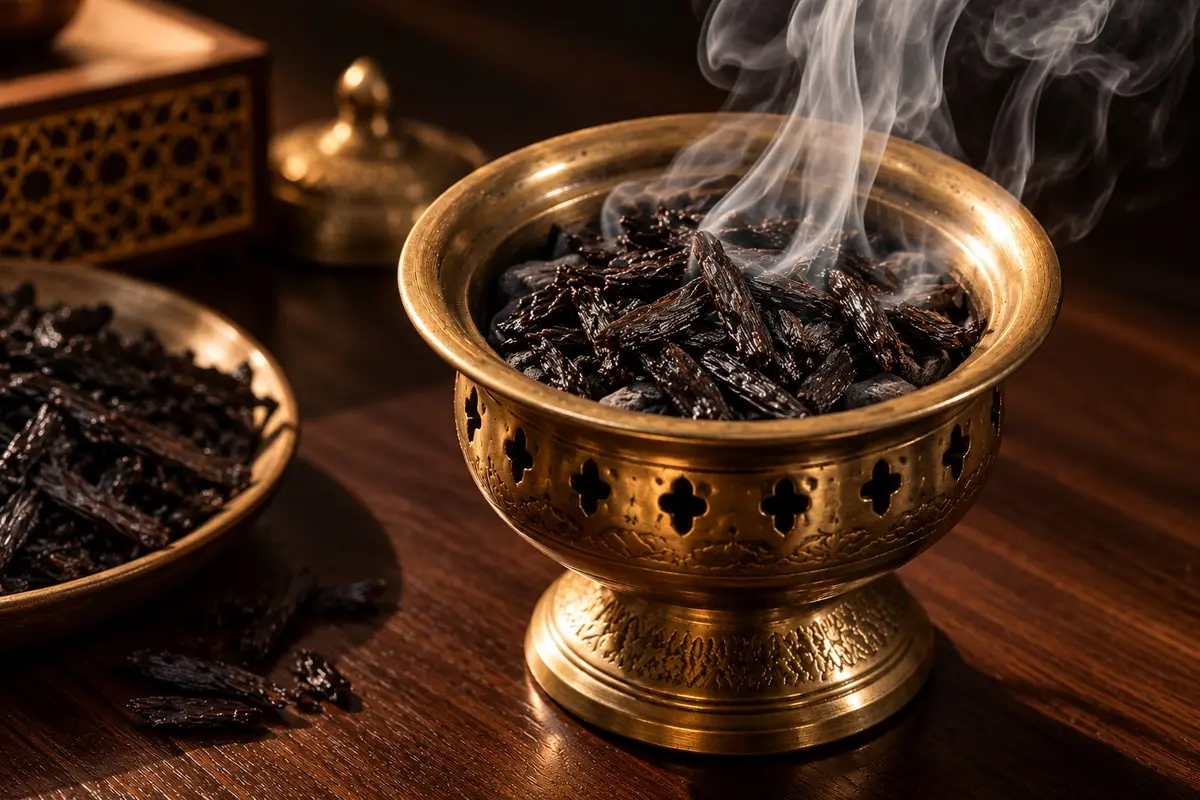
How to use bakhoor
Charcoal, electric and smokeless methods, step by step.
Oud bakhoor explained
Origin, scent and how real oud differs from synthetic.
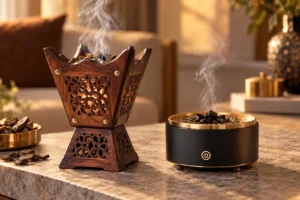
Bakhoor burner guide
Types of burner and mabkhara, and how to choose.
Watch and discover
Bakhoor in Action
Short videos to help you learn, understand and experience bakhoor.
How to burn bakhoor
Electric bakhoor burner
How to identify real oud
Scenting clothes and hair
Explore the knowledge hub
Bakhoor guides for every interest
Getting started
The basics of bakhoor, in simple terms.
How to use
Methods, tools and best practices.
Oud bakhoor
Origin, scent and real vs synthetic oud.
Burners
Charcoal, electric and mabkhara burners.
Bakhoor scent families explained
The main notes you will meet in bakhoor, what each one smells like and how they are used in blends.
How blends are built: most bakhoor combines a woody base such as oud and sandalwood, sweet resins such as amber, benzoin, frankincense and myrrh, and floral or musky notes such as rose, saffron and musk, bound with honey, sugar or oils.
Woody · Smoky
Oud
Smoky, woody and slightly sweet. The core of most traditional bakhoor.
- Real oud shifts as it heats, from sharper and smokier to woodier and rounder
- Plain oud chips are pure agarwood, while blends add rose, musk, amber and honey
Blend
Mukhallat
A classic Arabic fragrance built on oud, usually with musk, amber and floral notes.
- Recipes differ from one maker to the next
- Rose and sandalwood appear in some blends
Floral
Rose
Rich, warm and floral, sometimes with spicy or honey-like notes.
- Taif rose, grown in the highlands of Saudi Arabia, is a famous source of rose attar
- In bakhoor, rose is often paired with oud, saffron and sandalwood
Sweet · Resinous
Amber
Warm, sweet and soft, often with a vanilla-like touch.
- In perfumery, amber is usually a blended accord, not the fossil amber used in jewellery
- It is often built from labdanum, benzoin and similar resins
- Real ambergris is rare, and most amber scents are plant-based or synthetic
Soft · Skin-like
Musk
Soft, clean and smooth, with a skin-like warmth.
- Natural musk came from the musk deer, and its trade is now regulated under CITES
- Nearly all musk used in perfumery today is synthetic, often called white musk
- Musk acts as a fixative that helps a scent last longer
Creamy · Woody
Sandalwood
Creamy, soft and woody, with a faint sweetness.
- Indian (Mysore) sandalwood is creamy and faintly sweet, while Australian sandalwood is drier and greener
- Indian sandalwood is listed as Vulnerable by the IUCN and tightly regulated, which keeps it expensive
Explore oud bakhoor
The wood behind the smoke
Oud is the heart of most traditional bakhoor. Here's what it is made of, how it smells and where it comes from.
Ingredients
What's inside
- Agarwood (oud) chips or powder
- Fragrance oils such as rose or musk
- Resins, sugar or honey to bind
Scent profile
How it smells
- Opening: smoky and sharp
- Heart: woody, slightly sweet
- Lingering: warm and balsamic
Origin
Where it comes from
- Aquilaria trees in South and Southeast Asia
- Assam is one of India's best-known sources of Aquilaria
- Bakhoor culture grew in Arabia
Authenticity
Real vs synthetic
- Real oud is resin-rich agarwood, formed only in wounded, infected trees
- Some products use synthetic oud fragrance instead of real wood
- The full guide shows how to tell them apart
Did you know? Agarwood's fragrant resin forms as a defence response when an Aquilaria tree is wounded and infected by fungi. Only around 10% of wild trees are estimated to produce it, which helps explain the price.
Read the full guide: ingredients, scent and real vs synthetic oud
Beyond bakhoor
Other ways to scent your home
From incense to reed diffusers, a quick look at how each option works and how long it lasts.
With smoke or flame
Incense sticks
Agarbatti in dozens of scents. Easy to find and cheap.
Smoke: Yes
Lasts: Depends on stick length
Best for: Daily prayer, quick freshening
Sambrani and dhoop cups
Resin-based cups burned as dhoop, releasing fragrant smoke.
Smoke: Yes
Lasts: Depends on cup size
Best for: Rituals and prayer
Scented candles
Wax candles with fragrance oils and a soft glow.
Smoke: Minimal
Burn time: About 1 hour per inch of diameter, up to 4 hours at a time
Best for: Bedrooms, relaxing evenings
Wax melts
Scented wax warmed in a burner, no wick or flame on the wax.
Smoke: None
Lasts: Often about 5–12 hours of scent
Best for: Living rooms, long sessions
Smokeless
Essential oil diffuser
Ultrasonic mist with a few drops of oil in water.
Smoke: None
Lasts: About 3–12 hours per water fill
Best for: Bedrooms, offices
Reed diffuser
Reeds draw scented oil up and release it slowly.
Smoke: None
Lasts: About 1–3 months for a 100 ml bottle
Best for: Bathrooms, entryways
Room spray
Instant burst of fragrance from a spray bottle.
Smoke: None
Lasts: A short while
Best for: Quick refresh before guests
Fabric spray
Light mist for curtains, cushions and clothes.
Smoke: None
Lasts: A short while
Best for: Clothes, linen, sofas
Stay in the loop
One short email when we publish a new bakhoor guide. No spam, no product promotions.